Driving Digital Performance for a Digital Media Brand
Headless CMS scales and improves WPWhiteBoard’s content distribution, flexibility, and personalization
Ankita Deb
Are you fighting a daily battle with a slow, insecure, and rigid e-commerce platform? One that groans under traffic spikes, makes every minor update feel like a high-stakes gamble, and costs a fortune to maintain? You're not alone.
So many talented developers and architects are tethered to monolithic systems that just can't keep up with the demands of modern customers or the pace of business. You hear the buzz about new approaches, but you need something that solves real-world problems without a complete, budget-destroying overhaul.
Jamstack ecommerce is a modern architectural approach that decouples the front-end storefront from the back-end services. By pre-building pages and serving them over a CDN, it delivers unparalleled speed, security, and scalability for online stores.
This isn't just another trend; it's a fundamental shift in the way of building high-performance digital storefronts. This guide is designed to cut through the noise and give you a clear, practical understanding of this powerful approach towards Jamstack ecommerce.
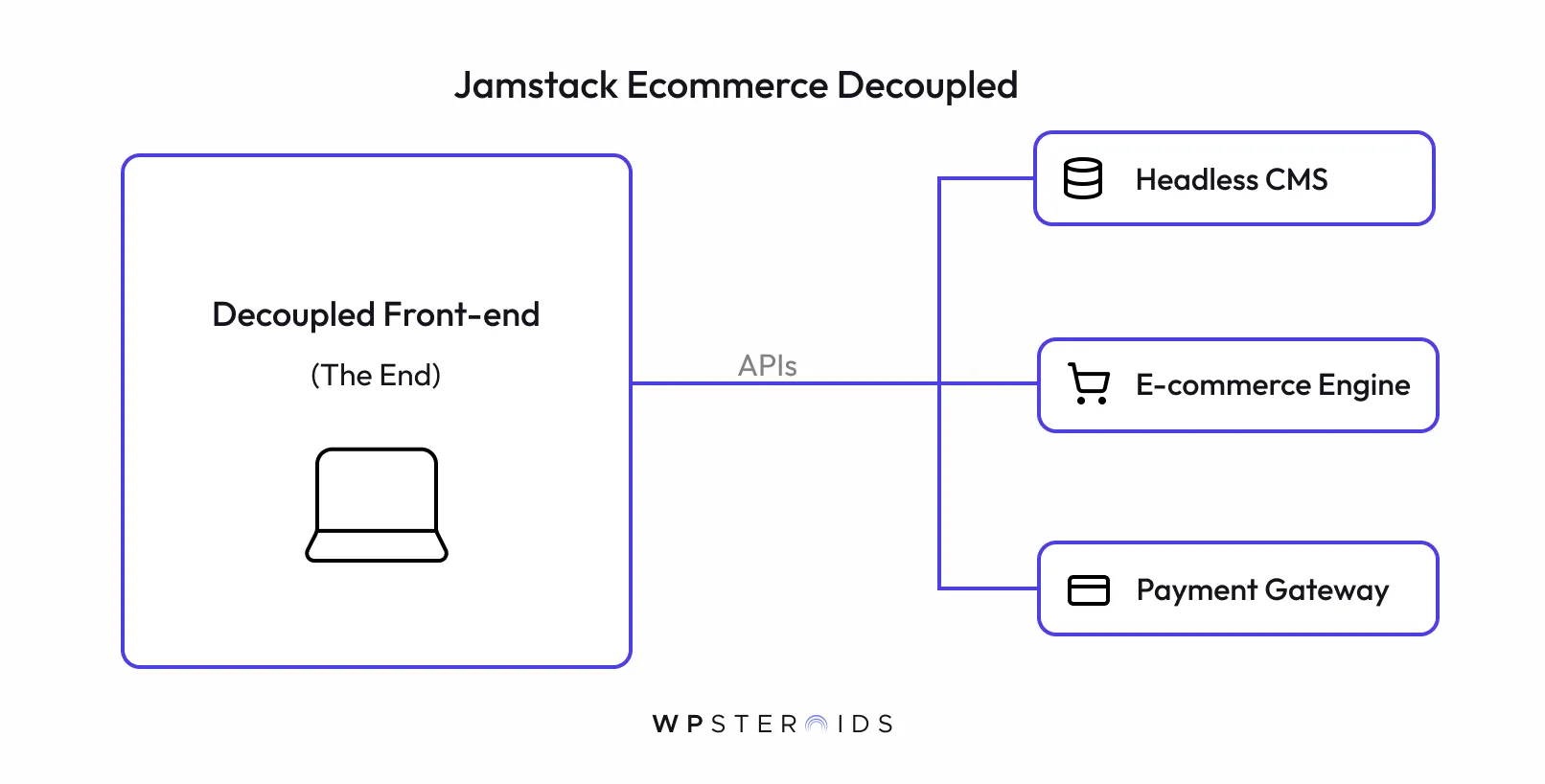
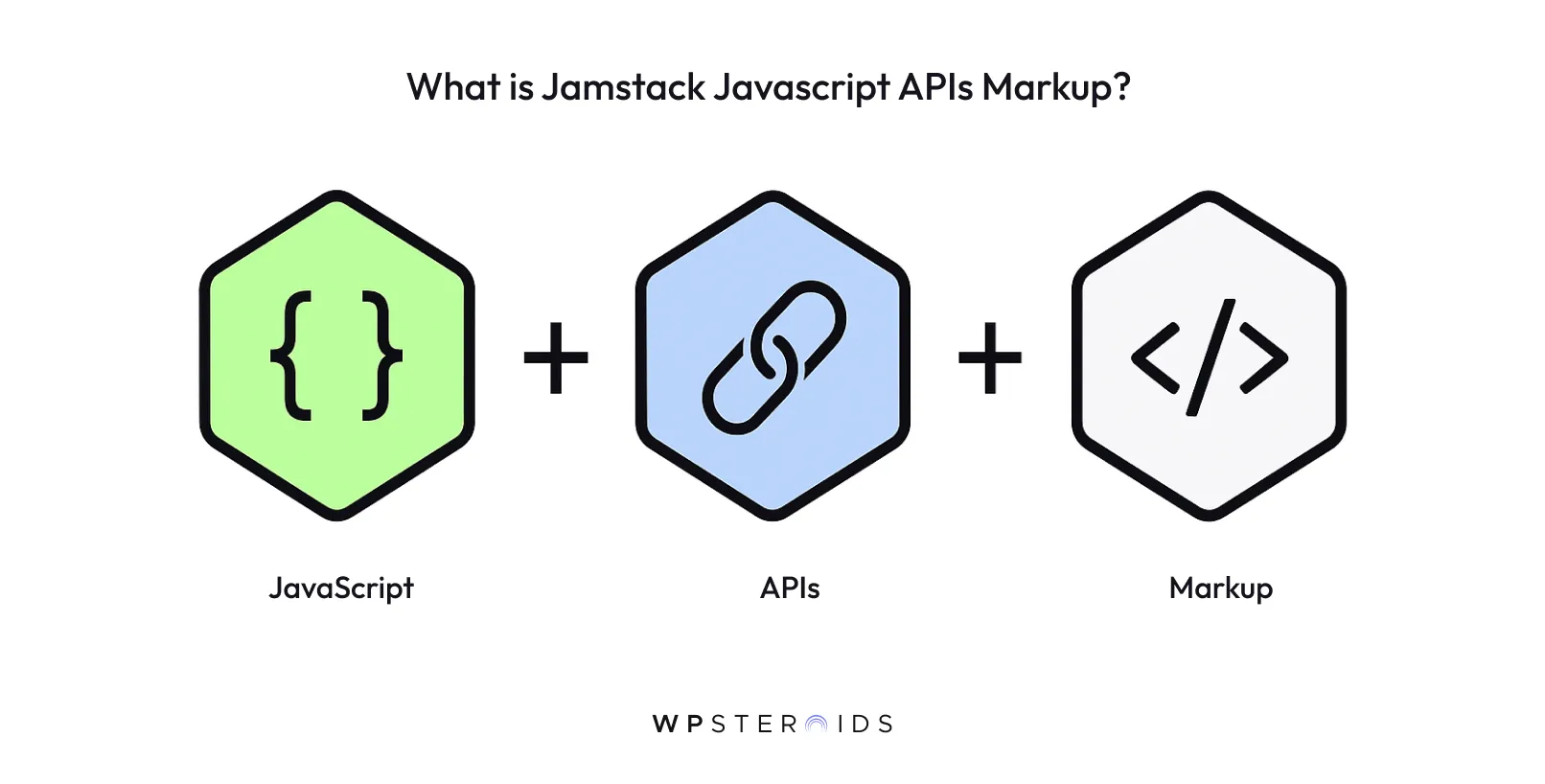
At its heart, Jamstack is not a specific technology but a modern architectural philosophy for building faster, more secure, and scalable websites. To understand what Jamstack is, let's quickly break down the acronym:
The magic of the Jamstack architecture lies in its "pre-rendering" approach. Instead of a server having to build a page from a database every single time a visitor arrives, a Jamstack site is built ahead of time.
The entire site is compiled into a set of optimized static files (HTML, CSS, JavaScript).
So how does this apply to the complex, dynamic world of ecommerce? This is where the idea of composable commerce comes in. The Jamstack architecture allows you to decouple your front-end storefront (the "head") from all your back-end services.
Think of Jamstack like building a Lego model. In the old, monolithic world, all the pieces are glued together into one fixed block—try changing one piece, and you risk breaking the whole thing.
With Jamstack, each Lego block (your headless content management system (CMS), payment API, product database, CDN) is independent but designed to click together seamlessly using APIs to connect them.
Want to upgrade your payment gateway or switch to a new inventory system? You just swap the Lego blocks without tearing down the entire model.
This is the core strength of Jamstack ecommerce; it gives you the freedom to choose the absolute best tool for every job.
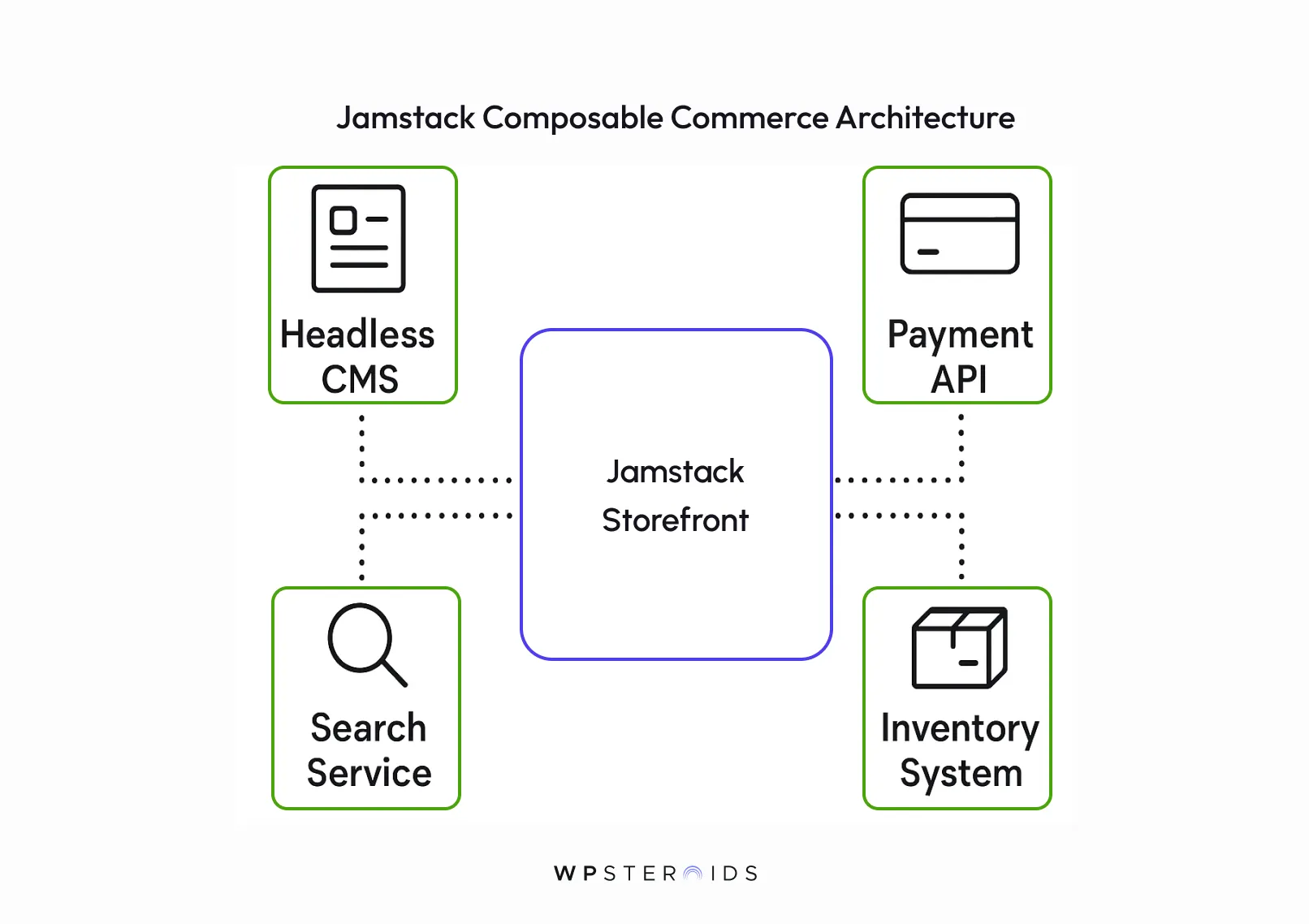
A powerful headless content management system for your blog, a specialized ecommerce backend for your product catalog, and a third-party search service for lightning-fast queries—and compose them into a unified, high-performance ecommerce store.
To understand why an architectural shift like Jamstack is gaining so much momentum, we first have to look at the massive pressures on the e-commerce market today.
The expectations of both customers and businesses have evolved far beyond what traditional platforms were built to handle.
The bar for a successful online store is higher than ever. Customers now demand seamless, instant, and personalized experiences across a huge range of devices and channels. Key trends shaping the landscape include:
If those trends feel like a lot to keep up with, you’re not wrong. The real problem is that the monolithic architecture of most traditional e-commerce platforms makes adapting to these demands incredibly difficult. These challenges probably sound familiar:
This is precisely where Jamstack enters the picture. It's not just a new way of building; it's a direct architectural response to the challenges of the modern e-commerce market.
Instead of trying to patch the weaknesses of an outdated model, Jamstack provides a foundation that is inherently fast, secure, and flexible. Its decoupled, API-first approach is built for an omnichannel world, allowing you to easily integrate the best tools for personalization, search, and content management.
By pre-building pages and serving them from a global CDN solves the performance and scalability problem by design, ensuring your store is always fast, no matter how much traffic you get. Jamstack provides the agile, composable foundation needed to not just compete, but to lead.
To truly grasp the value of Jamstack, it's essential to understand how it fundamentally differs from the monolithic architecture that powers most of the e-commerce world today.
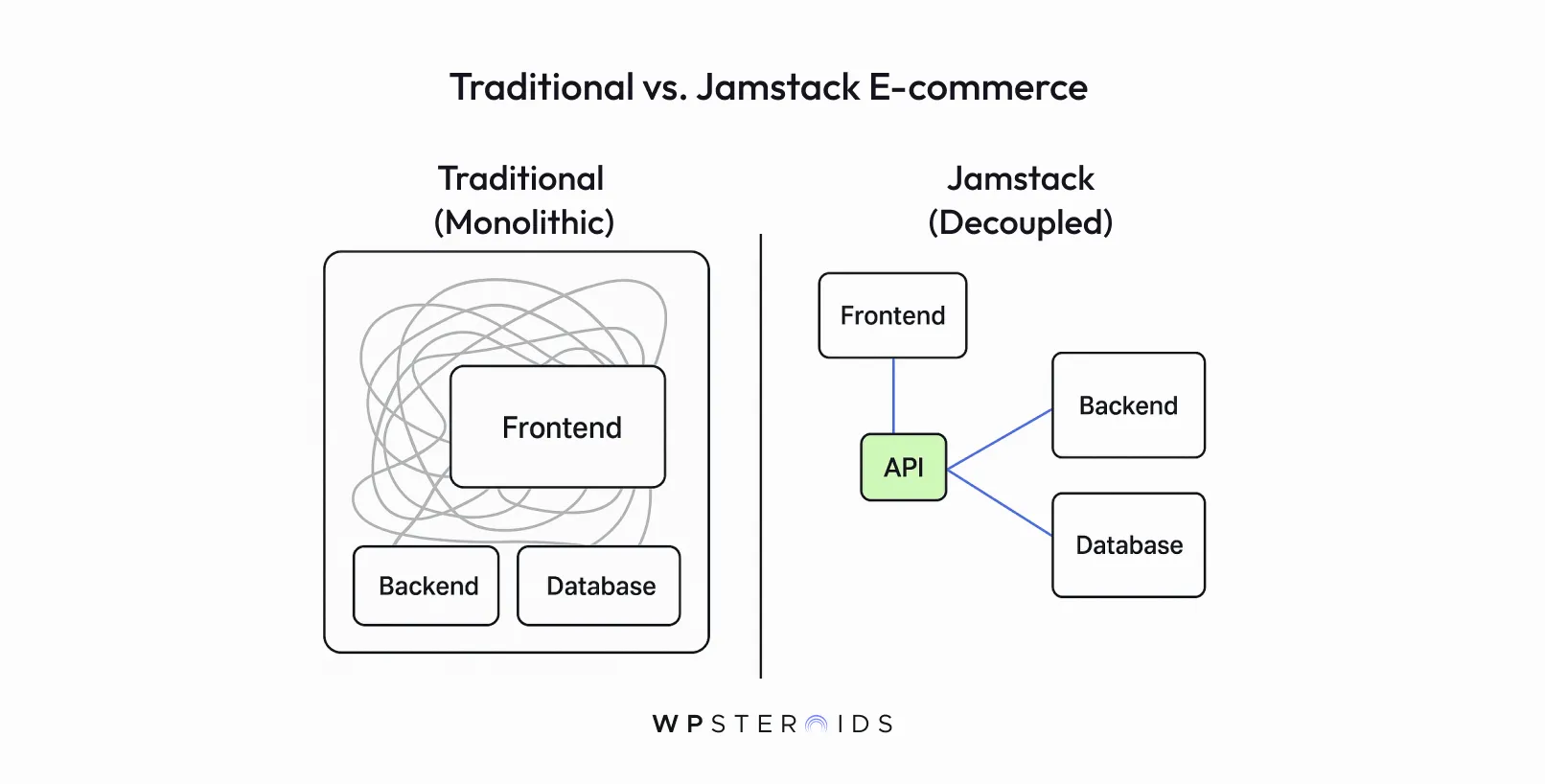
This isn't just an incremental improvement; it's a completely different way of thinking about how the front end and back end of an e-commerce store should work together.
This means the storefront (what the user sees) and the backend logic (databases, payment processing, inventory management) are all tightly bundled into a single, interdependent system.
Jamstack, on the other hand, is decoupled and API-first. The storefront is built as a separate, independent application that pulls data from various backend services via APIs. This seemingly simple change has profound implications.
Here’s a direct comparison of the two approaches:
Feature | Traditional Monolithic (e.g., Magento, WooCommerce) | Jamstack (Decoupled) |
|---|---|---|
Speed | Slow. Pages are built on the server for every request, creating a performance bottleneck. | Extremely Fast. Pages are pre-built and served instantly from a global CDN. |
Security | Vulnerable. A large, complex codebase with numerous plugins creates a massive attack surface. | Highly Secure. No direct connection to databases or servers from the front end dramatically reduces vulnerabilities. |
Scalability | Expensive & Complex. Requires scaling up entire servers to handle traffic spikes, which is costly and slow. | Effortless & Affordable. CDNs are built for massive, global scale by default. Performance doesn't degrade. |
Developer Experience | Restrictive. Developers are often locked into proprietary theming engines and outdated tech stacks. | Flexible & Modern. Allows developers to use the best modern frameworks and tools for the job, leading to faster innovation. |
Cost | High. Involves expensive hosting, server maintenance, security patches, and often licensing fees. | Lower. CDN hosting is significantly cheaper, and there's less need for server maintenance. |
This table highlights the clear advantages of the Jamstack architecture, moving away from the constraints of legacy e-commerce solutions.
This is a common and important question. The short answer is: no, but they are very closely related and work together perfectly.
Think of it this way:
So, while you can have headless commerce without Jamstack (for example, by using a traditional server-rendered front end), Jamstack is arguably the best way to realize the full potential of a headless strategy.
It provides the speed, security, and scalability that modern commerce experiences demand, seamlessly connecting to a headless content management system or a headless commerce backend to pull in dynamic content and functionality.
It’s easy to look at the performance and security benefits of Jamstack and see it as a smart technical choice. But that’s only half the story.
The architectural shift to Jamstack is a strategic business decision that positions your company to win in a rapidly evolving digital landscape.
The core problem with legacy e-commerce solutions is that they were built for a different era of the internet.
They were designed as all-in-one fortresses, but in today’s fast-moving ecommerce market, they feel more like prisons. For developers and architects, this leads to a constant state of frustration:
These platforms create technical debt and, more importantly, opportunity cost. While your team is busy maintaining a clunky system, your competitors are launching new features, entering new markets, and delivering better customer experiences.
While the immediate gains in speed and security are game-changers, they are symptoms of a much deeper benefit. The true, strategic power of Jamstack is business agility.
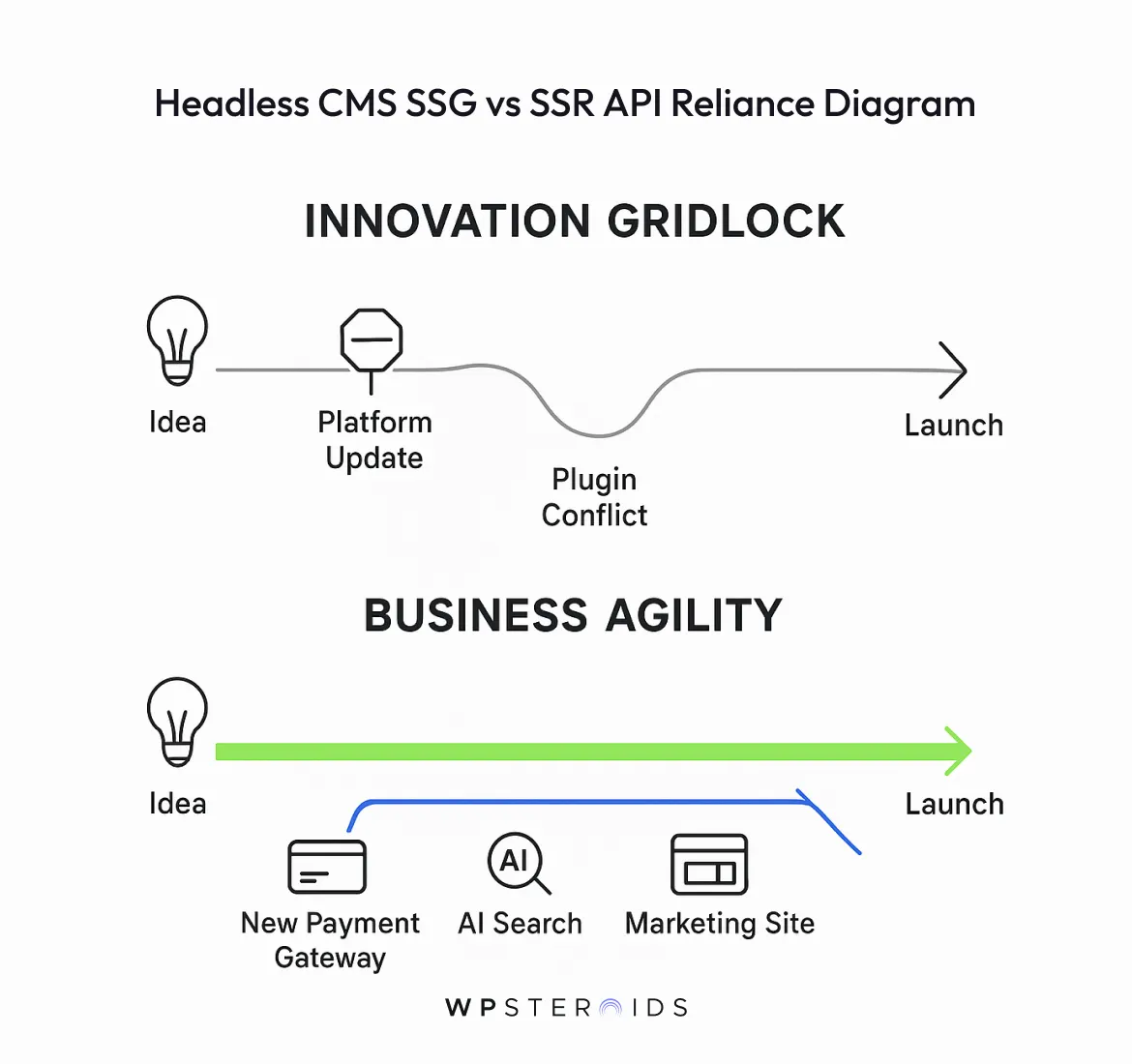
What does this mean in practice?
It means your technology stack stops being a roadblock and becomes an accelerator. Because your front end is decoupled from your backend services, you gain the freedom to innovate at the speed of your ideas.
This composable approach makes your entire digital presence more resilient and future-proof. When the next big channel or technology emerges, you won’t need to start over from scratch.
You’ll have the architectural flexibility to adapt, integrate, and lead the way, ensuring your business can respond to market changes faster than the competition.
Choosing the right backend is as crucial as deciding on the Jamstack architecture itself. While the front end gets the spotlight for speed and user experience, the headless ecommerce platform works behind the scenes, managing everything from product catalogs to order processing.
These platforms are not all created equal. They differ in features, scalability, developer experience, and target audience, ranging from SaaS giants providing headless APIs to API-native solutions built for composable commerce.
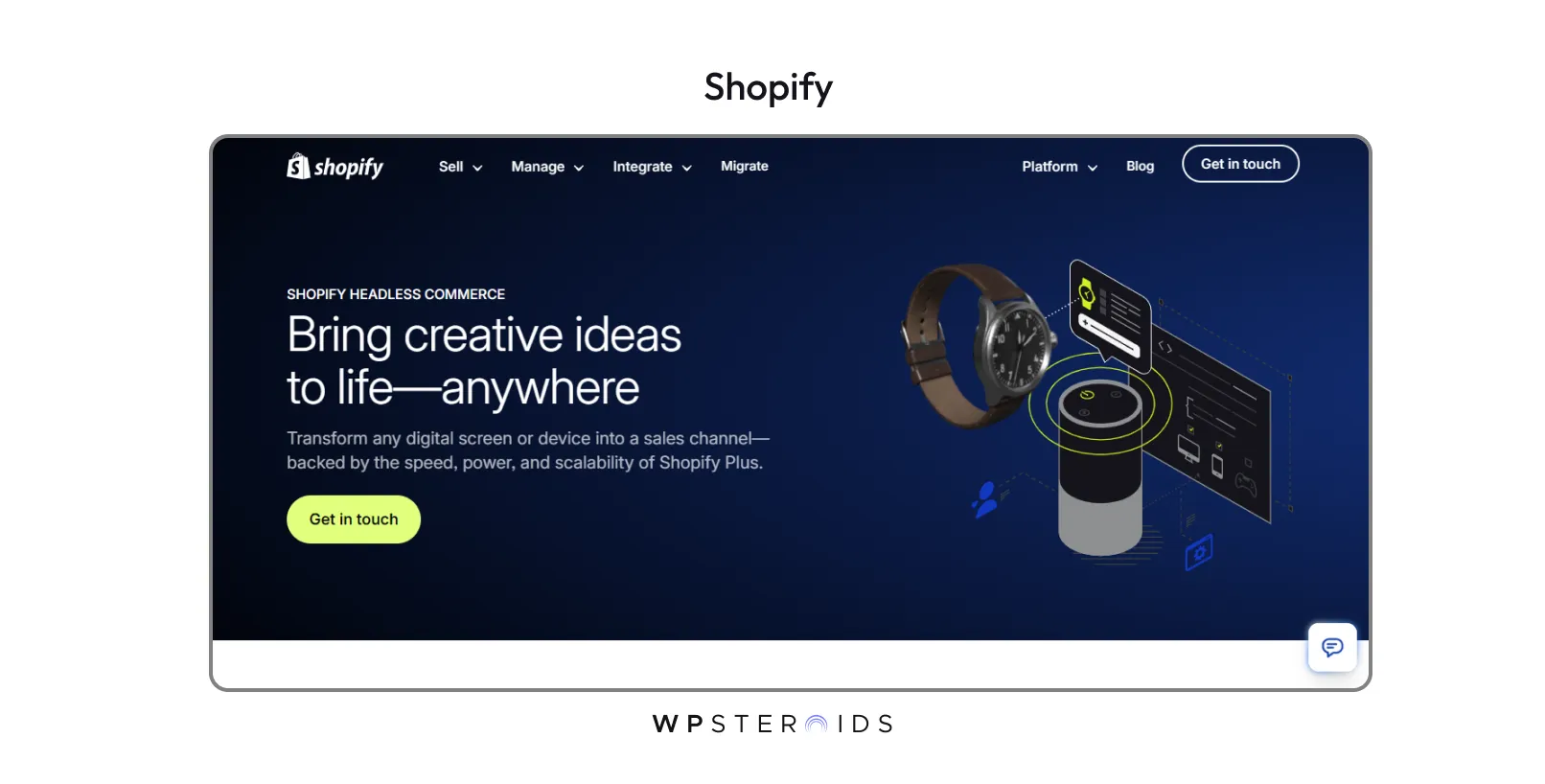
By using Shopify's powerful Storefront API, which uses GraphQL, you can build unique shopping experiences while retaining the platform's reliable checkout, payment processing, and inventory management.
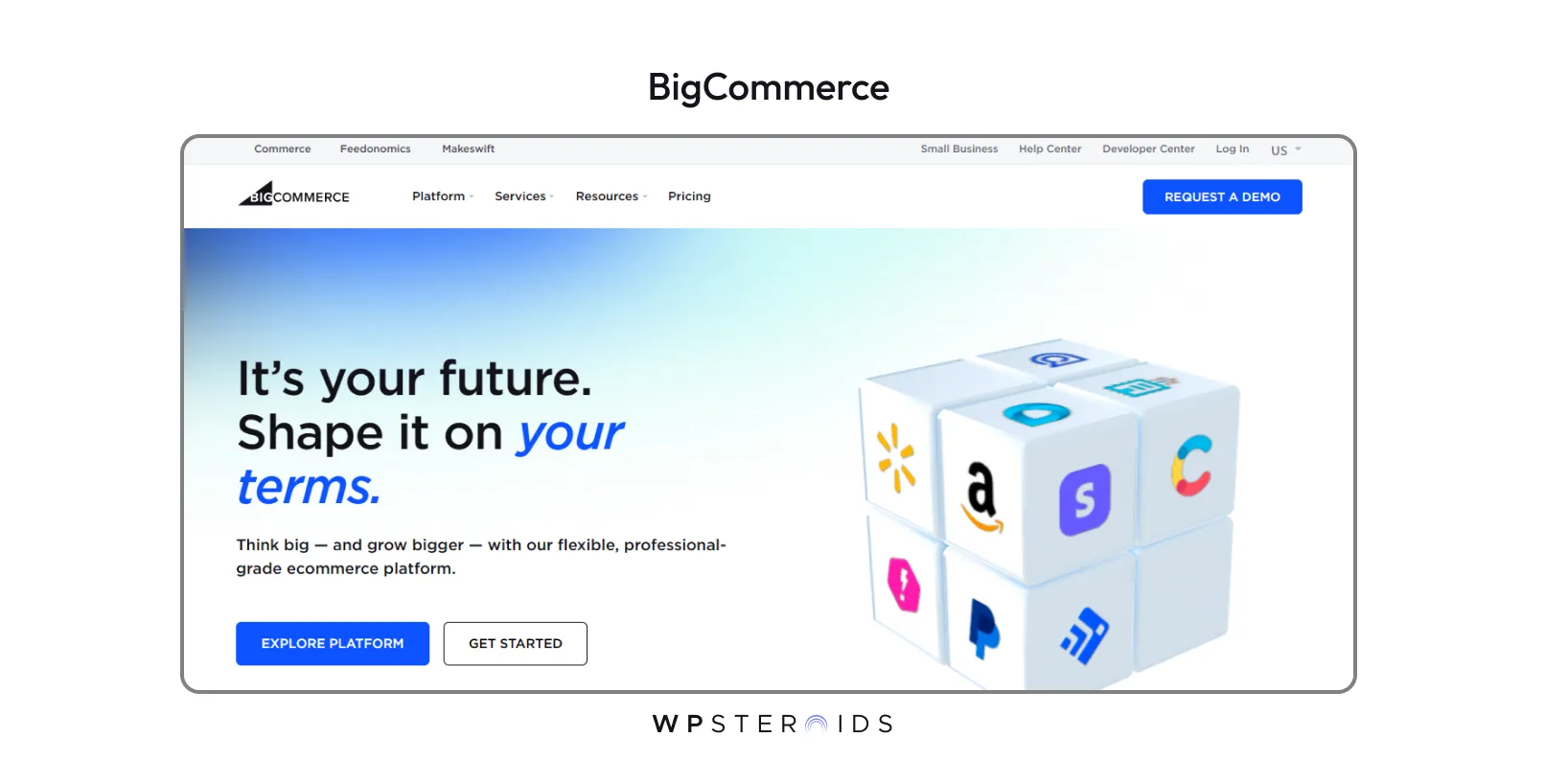
Its presentation layer is fully decoupled from its ecommerce engine, allowing developers to run multiple storefronts from a single backend.
A key differentiator is that BigCommerce does not charge additional transaction fees for using third-party payment gateways.
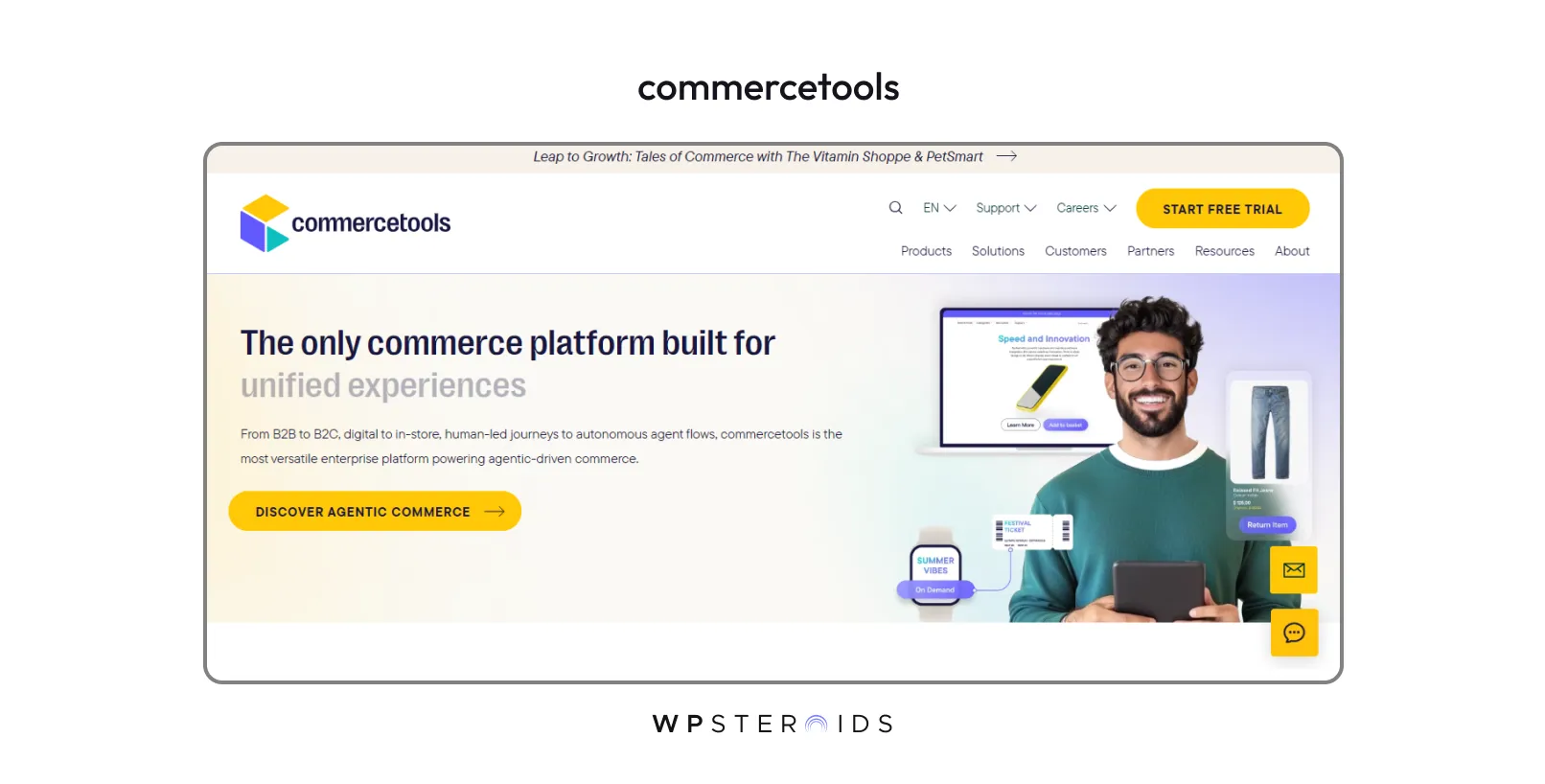
It provides a comprehensive set of API endpoints, allowing businesses to build completely custom, multi-channel commerce experiences from the ground up.
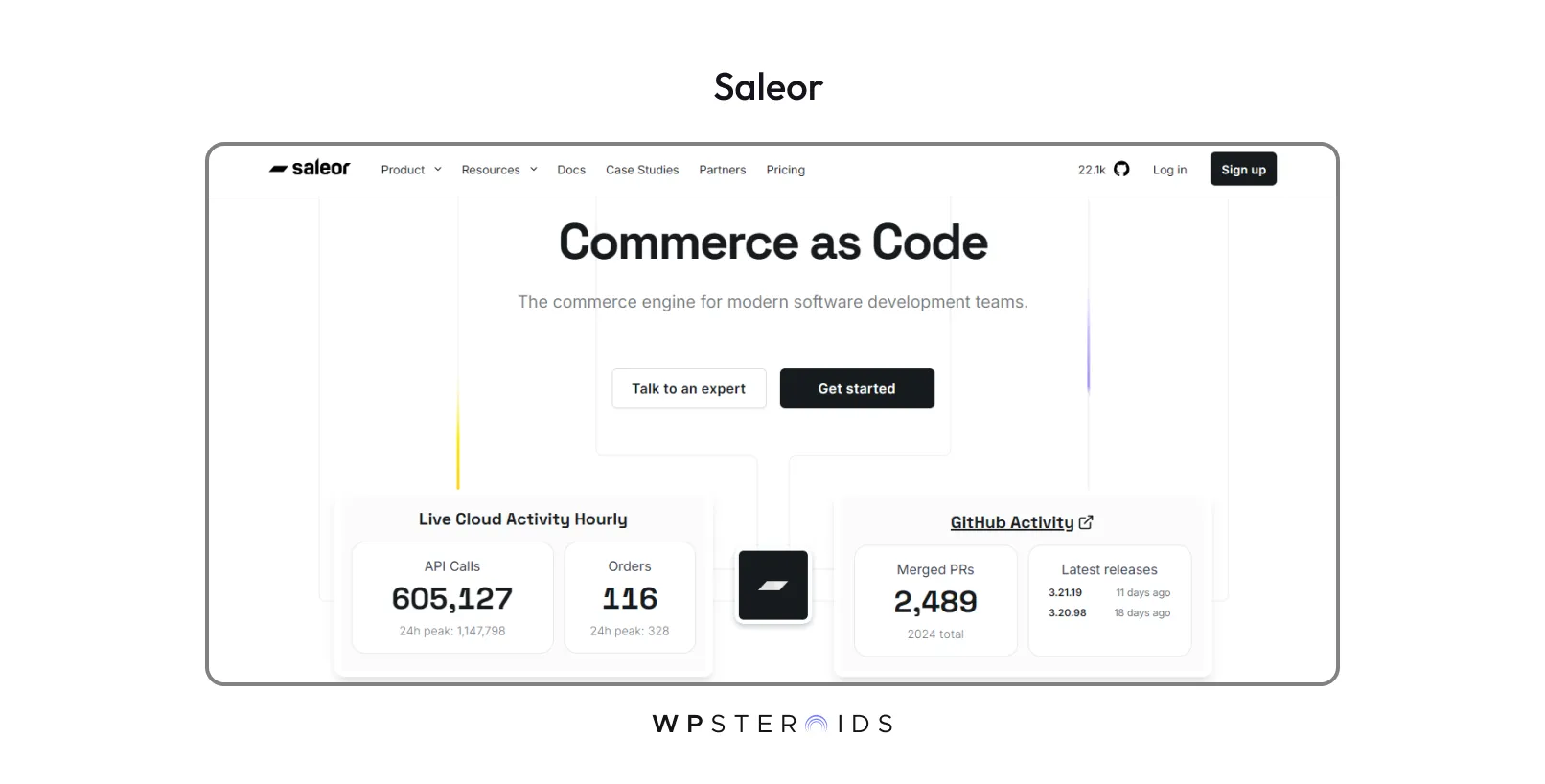
Being open-source, it offers a cost-effective and highly extensible solution for businesses that want full ownership and control over their technology stack, avoiding vendor lock-in.
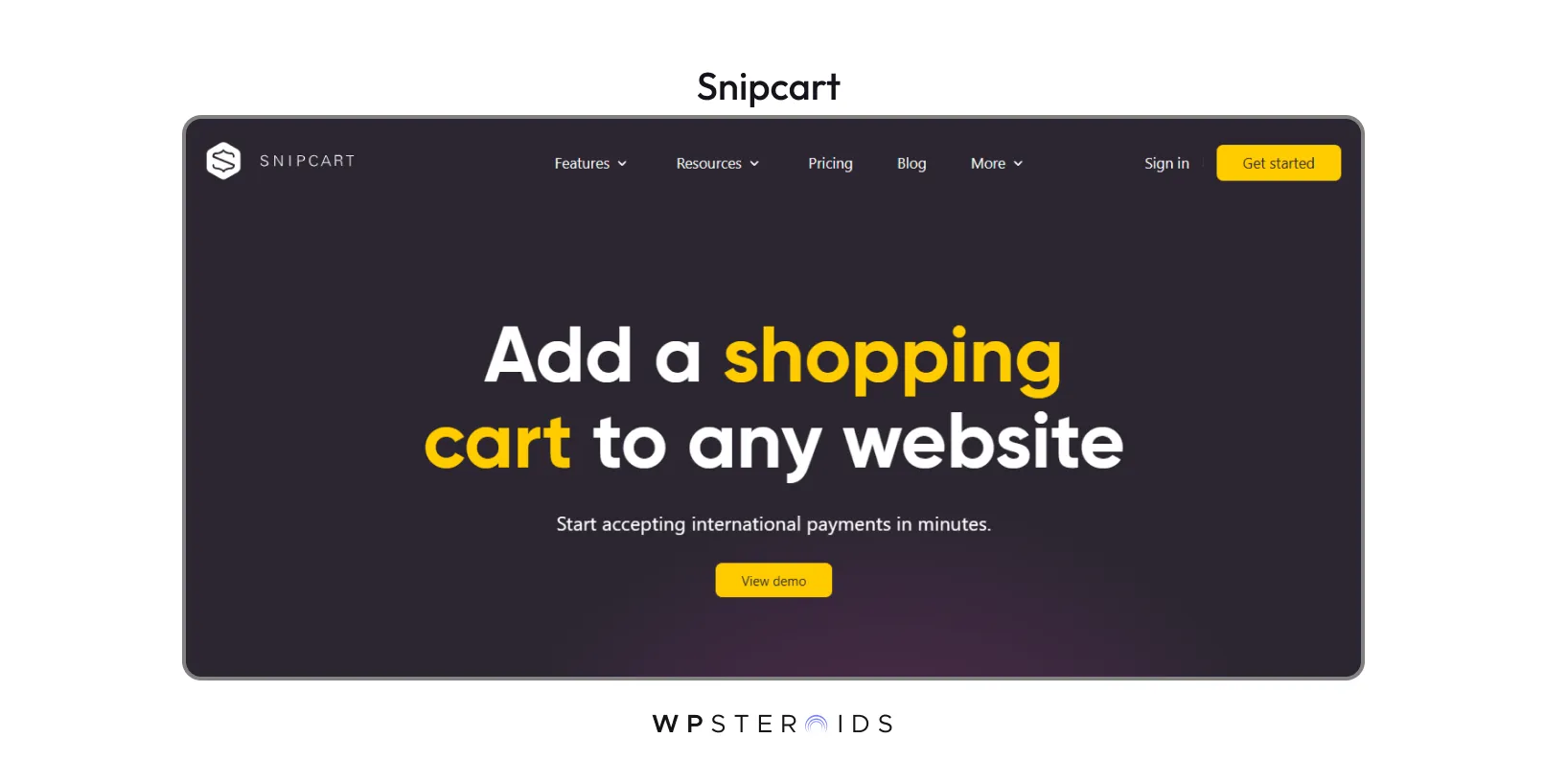
This makes it incredibly easy to add ecommerce functionality to a static site without a complex integration.
Now that we’ve established the architectural differences, let's focus on what this means for your business's bottom line.
The advantages of Jamstack are not just theoretical; they translate into tangible, measurable improvements in revenue, customer trust, and operational efficiency. These are some of the top benefits of using Jamstack for your ecommerce platform.
How does Jamstack improve site speed so dramatically? It’s because it eliminates the single biggest bottleneck of traditional websites: building the page on the server for every single visitor.
By serving pre-built, static files from a global CDN, your store loads almost instantly, anywhere in the world.
This isn't just a "nice-to-have." Site speed is a critical factor in ecommerce success. It directly impacts user experience, Google's Core Web Vitals, and, most importantly, your conversion rates. The cost of a slow site is staggering. As proof, consider the latest industry data:
By fundamentally solving the performance problem, the Jamstack architecture ensures you're not leaving money on the table with every page load. This is one of the key benefits of the Jamstack architecture for any online retailer.
What security advantages does Jamstack offer?
By decoupling the front end from the backend systems, you achieve higher security by design. Since your main website consists of static files served from a CDN, there is no active server-side software or direct database connection to exploit.
Think about it: hackers can't breach a database that isn't connected to the storefront. Your customer data, inventory, and payment gateways are all handled through secure, sandboxed APIs, making your public-facing Jamstack sites incredibly resilient to attack. This robust security posture builds customer trust and protects your brand's reputation.
Furthermore, Jamstack is perfectly suited for global expansion. If you need to support multiple languages or currencies, static site generators make it simple to generate localized versions of your entire store.
You can easily deploy these different versions to specific regions through your CDN, ensuring that customers in Tokyo get a Japanese version served from a local server just as instantly as a customer in New York gets the English version.
Is Jamstack more cost-effective? In most cases, yes. Traditional hosting requires you to pay for servers to be running 24/7, and you often have to over-provision resources to handle potential traffic spikes, like during a holiday sale. This is expensive and inefficient.
With Jamstack, you're primarily paying for CDN bandwidth, which is significantly cheaper. Better yet, the scalability is built in. If your product goes viral and you get ten times your normal traffic, you don't have to do anything.
The CDN is designed to handle that level of demand without compromising your site's performance. This effortless scalability not only saves you money on hosting but also saves you from the stress and lost revenue of a site crash during your busiest moments. These are some of the most compelling jamstack for e-commerce top benefits.
Understanding the benefits of Jamstack is one thing; seeing how a store actually comes to life is another. The workflow for building a Jamstack ecommerce solution is fundamentally different from a traditional, monolithic setup.
It’s a modern, Git-based process that prioritizes developer experience, automation, and reliability.
So, what does the typical workflow for building a Jamstack eCommerce site look like? It generally follows these six core steps:
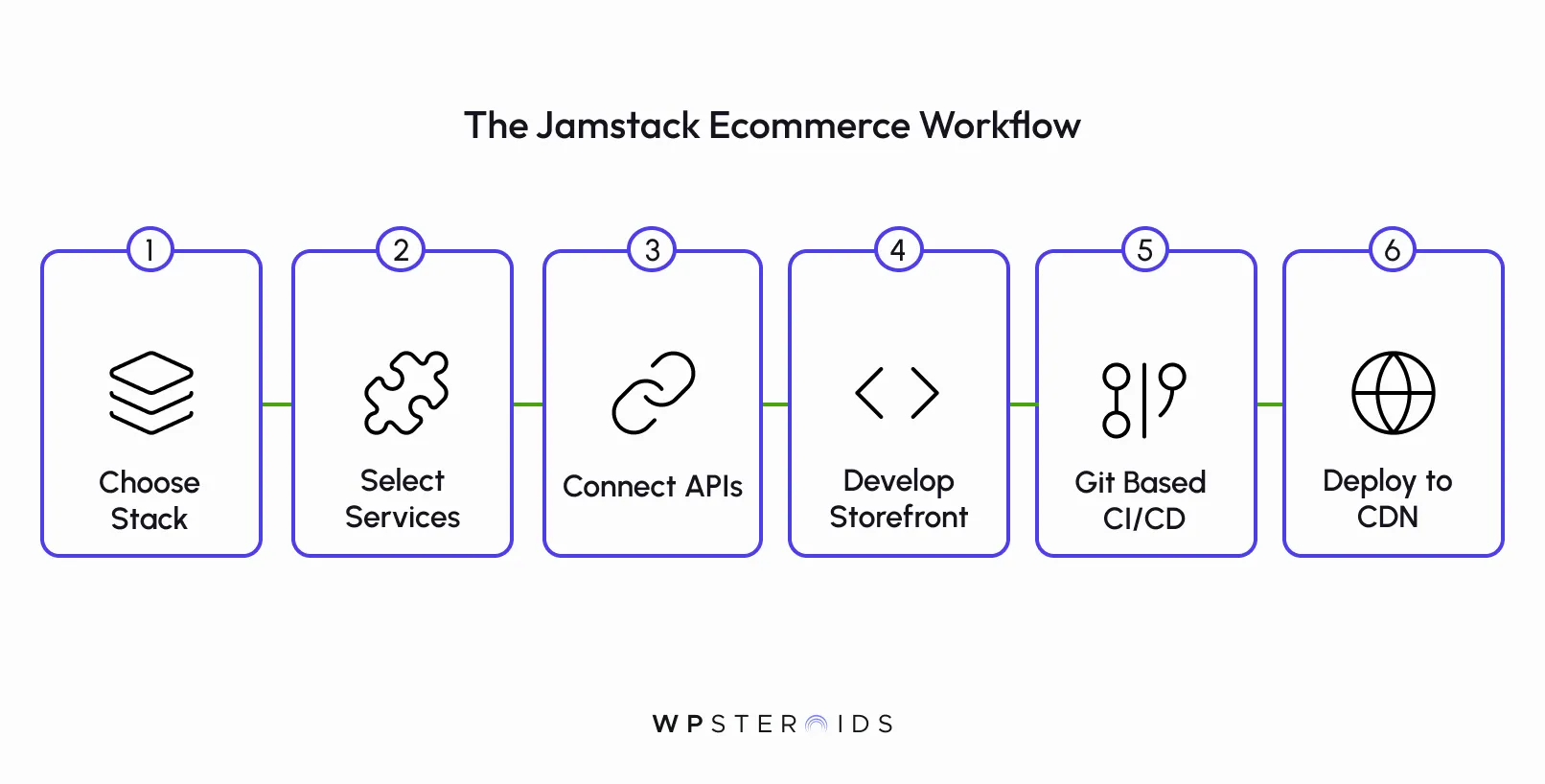
The beauty of the Jamstack ecosystem is its flexibility. You can choose the best tool for every job. Here are some of the most common and powerful tools used to build modern jamstack e-commerce solutions:
By combining these best-in-class tools, you can create a custom, high-performance ecommerce stack that is perfectly tailored to your business needs without being locked into a single vendor.
The benefits of using Jamstack today—speed, security, and scalability—are clear. But the most exciting part of this architecture is its capacity for future innovation.
Because Jamstack is an unbundled, API-first approach, it's perfectly positioned to integrate the next wave of digital commerce technologies without requiring a complete overhaul.
Here's a look at what the future holds for Jamstack for e-commerce.
Personalization is no longer a luxury; it's a core expectation. However, on monolithic platforms, integrating powerful, third-party AI and machine learning tools is often a slow, clunky, or impossible task.
You're either stuck with the platform's mediocre built-in tools or a heavy plugin that slows everything down
The decoupled nature of Jamstack blows these limitations away. Your front end is free to communicate with any best-in-class AI service via an API. This means you can:
You can compose these services together to create a deeply personalized shopping experience that monolithic systems can only dream of, all without bloating your core platform.
A Progressive Web App (PWA) is a website that delivers an app-like experience directly in the browser. PWAs are reliable (they can work offline), fast, and engaging (they can be "installed" on a user's home screen and send push notifications).
Jamstack architecture is the ideal foundation for building a PWA. Because the storefront consists of pre-built static files, it's incredibly efficient to cache them for offline access. This allows your customers to browse products, check their order history, and manage their cart even with a spotty internet connection.
For an ecommerce business, this means higher engagement, better retention, and a direct line to your customers through push notifications—all without the expense and friction of developing and maintaining native iOS and Android apps.
By running serverless functions on the CDN itself—physically close to your users—you can execute dynamic logic in milliseconds.
For an e-commerce store, this unlocks incredible possibilities:
This approach brings the dynamic capabilities of a traditional server right to the user's doorstep, blurring the line between static and dynamic.
It's a key feature of modern ecommerce solutions for Jamstack and a glimpse into a future where websites are both globally distributed and instantly interactive, a step beyond what many similar solutions can offer today.
We've journeyed from the frustrations of slow, rigid platforms to a new architectural horizon. The choice of using Jamstack for e-commerce offers a clear path away from the bottlenecks that hold your business back. By its very design, it delivers the superior speed that converts, the fortress-like security that builds trust, and the effortless scalability that handles success.
But the most critical takeaway isn't just the technical superiority. The core message is that the primary advantage of building with the Jamstack is the strategic business agility it provides.
You gain the freedom to out-innovate your competition by quickly adopting new tools, pivoting to new market demands, and delivering the cutting-edge experiences your customers deserve. This isn't just a trend; it's the future of modern ecommerce solutions—a move toward a more flexible, composable, and future-proof digital presence.
Ready to see how a composable, Jamstack-first approach can transform your online revenue? Book your discovery call today.
What does Jamstack stand for?
Jamstack stands for JavaScript, APIs, and Markup.
What is the most popular Jamstack?
Jamstack itself is an architectural approach, not a single product or brand. However, this architecture is brought to life using various frameworks and tools. Some of the most popular and powerful front-end frameworks used for building Jamstack sites are Next.js (built on React), Gatsby (React), and Nuxt.js (Vue).
What is the best platform for an eCommerce store?
The "best" platform depends entirely on your business needs. For businesses that need simplicity above all else, an all-in-one platform might be sufficient. However, for businesses that prioritize speed, security, scalability, and the strategic agility to innovate, a Jamstack approach combined with a headless commerce backend is increasingly considered the superior, future-proof choice.
Is Jamstack suitable for e-commerce?
Yes, absolutely. Jamstack is exceptionally well-suited for e-commerce because it directly solves the biggest challenges of traditional platforms. It delivers the sub-second load times needed to maximize conversions, offers a more secure architecture for transactions, and scales effortlessly to handle massive traffic spikes during sales events.
Why is Jamstack becoming so popular?
Jamstack is gaining popularity because it addresses the core pain points felt by both developers and businesses. It provides a better developer experience with modern tools, results in a faster and more secure end product for users, and gives businesses the agility to adapt and integrate new technologies without being locked into a monolithic vendor.
Is JAMstack good for large websites?
Yes, Jamstack is excellent for large, enterprise-scale websites. Modern Static Site Generators (SSGs) use intelligent techniques like incremental builds, which means that when content is updated, only the affected pages need to be rebuilt, not the entire site. This, combined with the scalability of a CDN, makes it a robust solution for sites with thousands or even millions of pages.
What skills are needed for JAMstack?
A development team looking to build with Jamstack should have strong front-end fundamentals (HTML, CSS, JavaScript), proficiency in a modern JavaScript framework like React or Vue, a solid understanding of Git-based workflows, and experience in consuming data from APIs.
What is the difference between JAMstack and SSR?
The key difference is when the page is generated. With Jamstack, pages are pre-rendered into static HTML at build time (before a user ever visits). With traditional Server-Side Rendering (SSR), the page is generated on the server at request time (after a user clicks a link). Jamstack is generally faster and more scalable because the work is done in advance. Modern Jamstack frameworks like Next.js can also blend these approaches.
Is Jamstack good for SEO?
Jamstack is outstanding for SEO. Its incredible speed gives it a major advantage with Google's Core Web Vitals. Because pages are pre-rendered as simple HTML, they are extremely easy for search engine crawlers to read and index. This clean, fast, and secure foundation is exactly what search engines prioritize.
What is the difference between JAMstack and Headless CMS?
They are two distinct parts of a modern web stack that work together. A Headless CMS is a backend-only content repository that makes your content available via an API. Jamstack is the front-end architecture used to build the actual website that fetches content from the Headless CMS.
What role do APIs play in Jamstack eCommerce?
APIs are the essential glue in a Jamstack ecommerce architecture. They securely connect your pre-built storefront to all the dynamic backend services it needs to function, including the ecommerce platform (for product data, cart, and checkout), the headless CMS (for marketing content), payment gateways, search providers, and personalization engines.
Which Headless CMS platforms work best with Jamstack eCommerce?
Many excellent Headless CMS platforms integrate seamlessly with Jamstack. Popular choices known for their developer-friendly APIs and flexibility include Contentful, Strapi (open-source), Sanity, and Storyblok. The best choice depends on your team's technical skills, content workflow, and budget.