Driving Digital Performance for a Digital Media Brand
Headless CMS scales and improves WPWhiteBoard’s content distribution, flexibility, and personalization
Sahil Mahalley
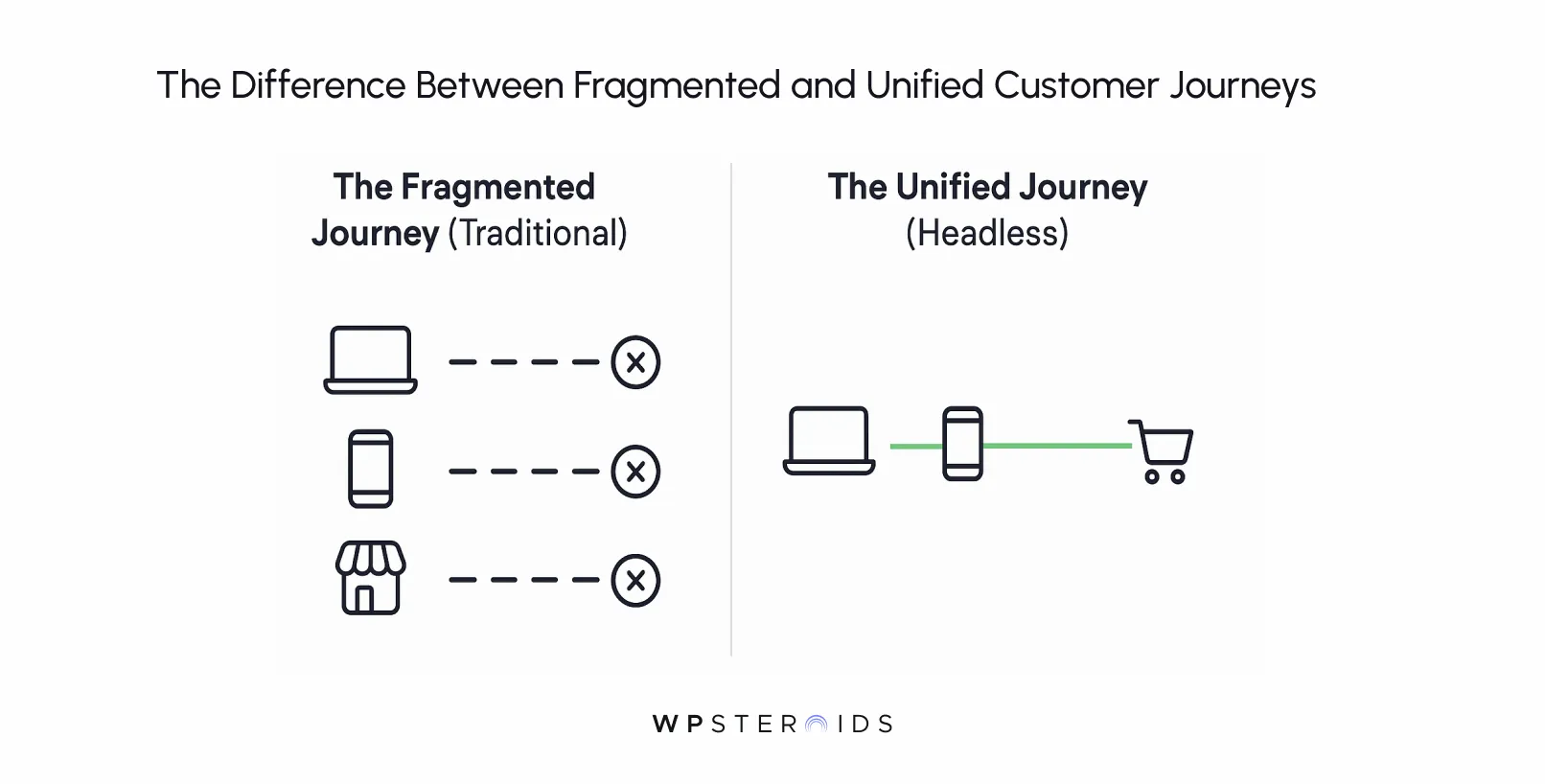
Does this sound familiar? Your marketing team launches a brilliant campaign, but the promotion doesn’t show up correctly in your mobile app.
A customer service ticket reveals that a user’s cart from their laptop isn't synced with their phone. You want to launch a new feature on your website, but the IT backlog means it will take six weeks, long after the market opportunity has passed.
You’re not just imagining it. You're struggling to deliver a consistent, personalized, and seamless experience for customers who engage with your brand across a dozen different touchpoints, and you're not alone.
These fragmented customer journeys are actively costing businesses loyalty and revenue, turning what should be a smooth path to purchase into a frustrating series of dead ends.
A headless customer experience, powered by a decoupled front and back end, is a strategic approach that allows businesses to create consistent, personalized, and agile omnichannel journeys.
By centralizing content and commerce logic in the back end and using APIs to deliver it to any front-end screen or device, companies can eliminate data silos, reduce friction, and rapidly adapt to evolving customer expectations.
This is a business-first blueprint for leveraging headless architecture to solve your most pressing strategic problems.
It’s more than tech jargon! Let’s see how a headless cms and headless commerce platform can create truly unified omnichannel experiences.
Understand how a unified customer journey is built for your brand, which your customers deserve.
A headless Content Management System (CMS) manages and stores your content, but without a predetermined, built-in front end (the "head"). In a traditional setup, the CMS dictates how your content looks and where it goes—usually a single website.
The content and the design are tightly bundled together.
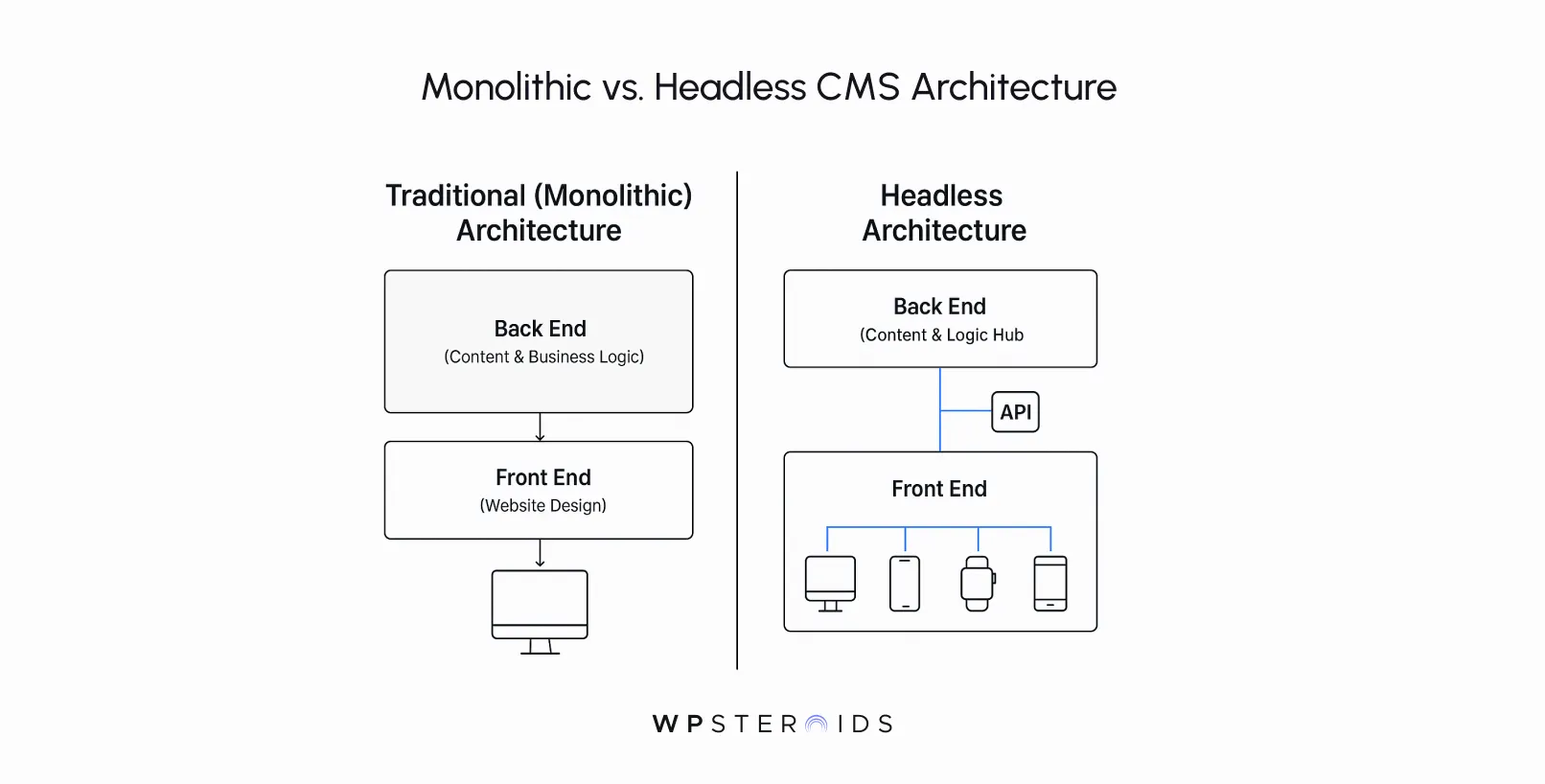
A headless CMS breaks that bundle apart. It focuses purely on being the best possible place to store, organize, and manage your content—product descriptions, blog posts, marketing copy, promotional banners, you name it.
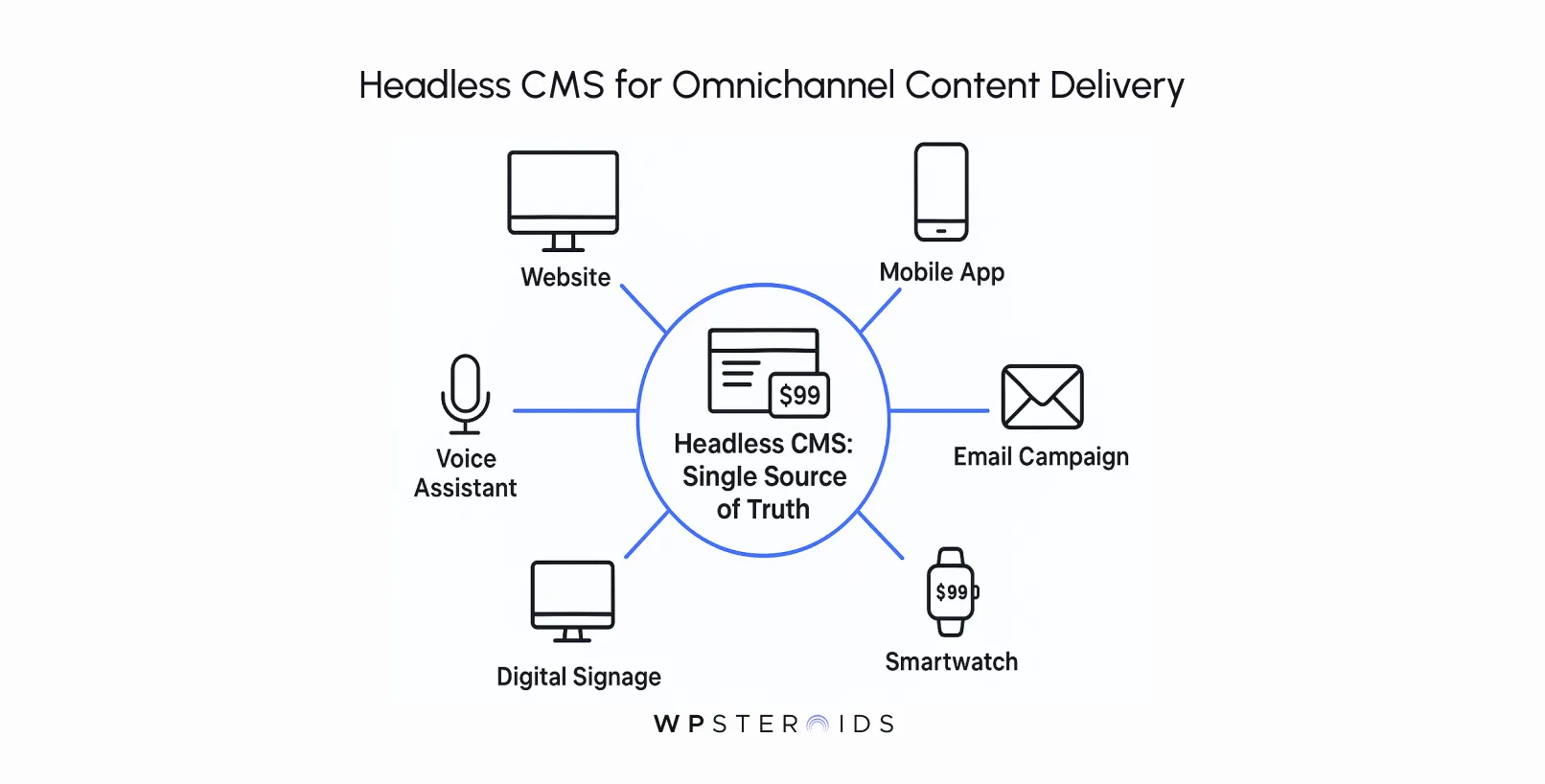
This separation is the secret ingredient for a true omnichannel strategy. When your content is locked into a traditional CMS, you're constantly duplicating efforts.
You have one team managing the website content, another trying to adapt it for the mobile app, and perhaps another manually updating digital signage.
This leads to inconsistencies, errors, and a disjointed customer experience.
With a headless cms, you update a product price or a marketing message once in the back end, and that change is instantly reflected everywhere.
For commerce businesses, this architectural shift unlocks tremendous competitive advantages.
The benefits go far beyond simple content consistency:
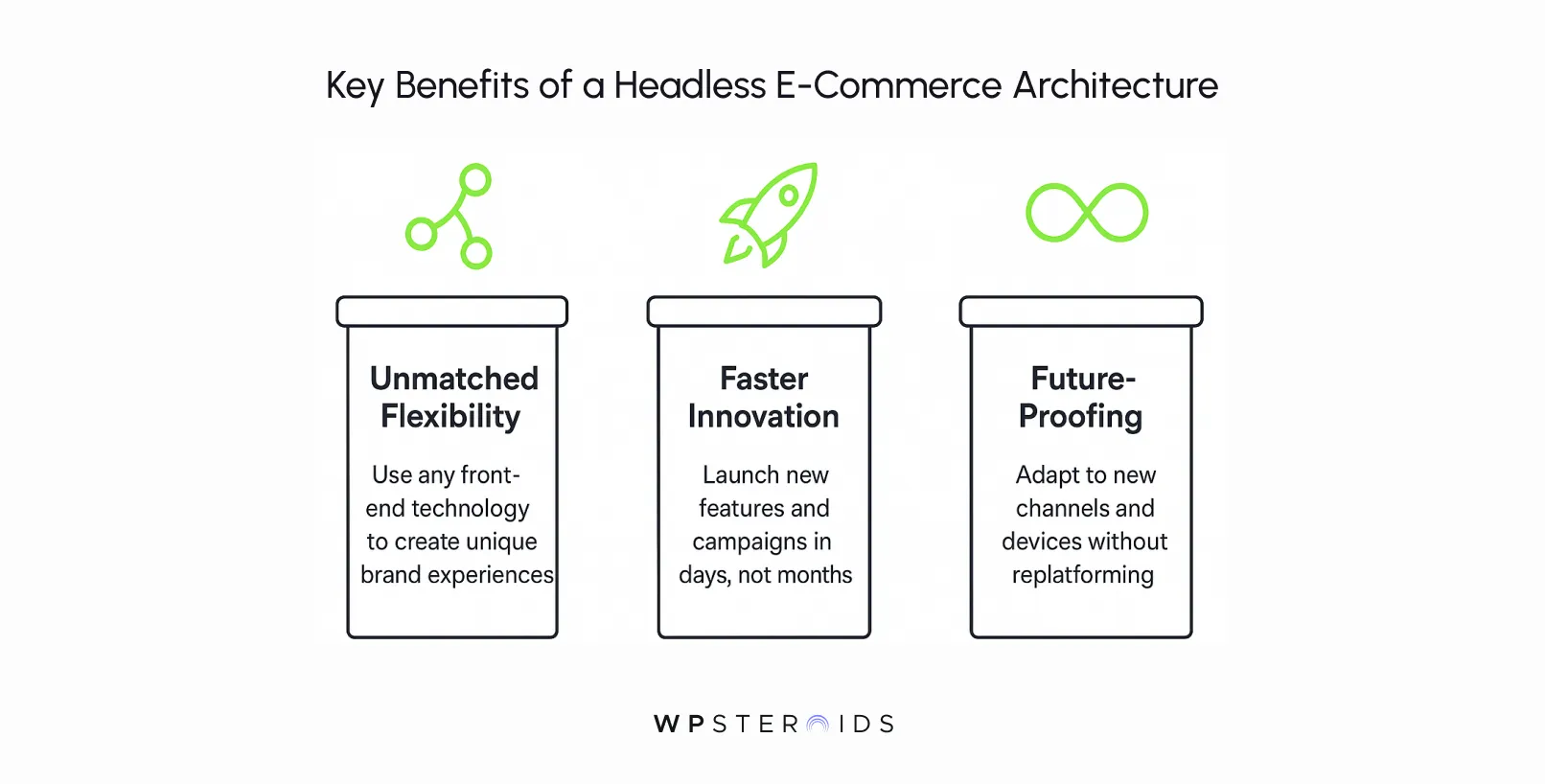
All these technical and strategic benefits translate into a better, smoother, and more rewarding experience for your customers.
When you improve customer experience, you drive loyalty and revenue.
A headless CMS improves customer experience in several key ways. First, by allowing developers to use modern frameworks, it often leads to significantly faster page load times, which is a critical factor in conversions and customer satisfaction.
Second, the consistency across channels builds trust and reduces frustration. Customers can pick up their journey on one device and seamlessly continue it on another without losing context.
If you’ve ever felt like your technology is working against you, you're probably right. For years, the standard for e-commerce was a monolithic, all-in-one platform.
This system, where the front end (the customer-facing website) and the back end (the business logic, inventory, and content) are fused into a single, rigid block, was once the go-to solution.
But in today's omnichannel world, it's the very thing creating the disconnected journeys that frustrate your customers and hamstring your growth.
The modern customer doesn't live on a single channel, so why is your business forced to operate that way? The challenges of a monolithic architecture are deeply rooted in its inflexibility.
Because everything is tightly coupled, a simple change can have a ripple effect, requiring extensive testing and long deployment cycles.
This creates a host of familiar problems:
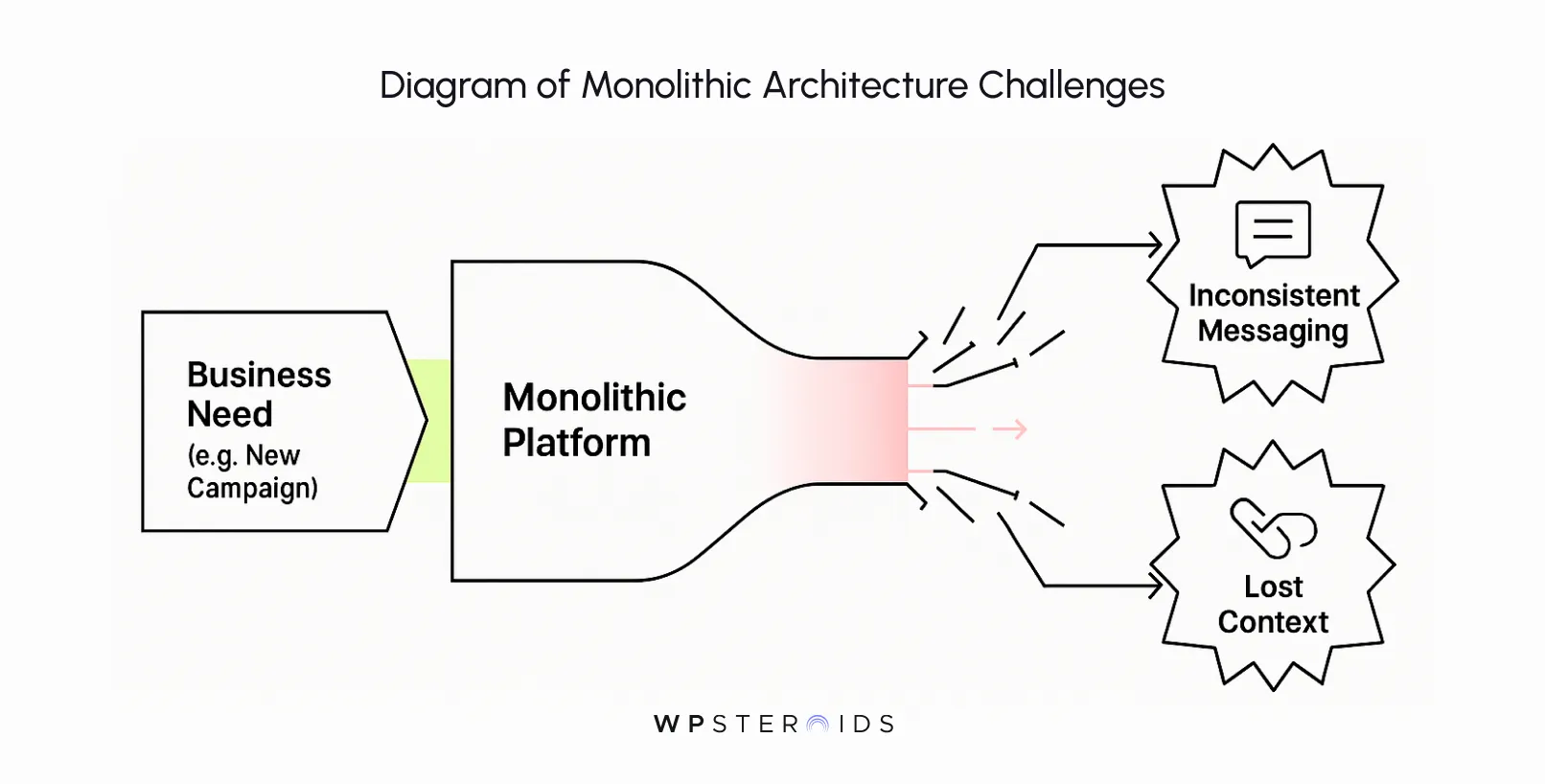
They recognize that you can't build the fluid, fast-moving experiences customers expect on a foundation made of digital concrete.
Here’s where many leaders get tripped up. The instinct is to view the transition from traditional commerce to headless as a purely technical swap—out with the old platform, in with the new. But that approach misses the bigger picture entirely and can lead to disappointing results.
While most content hails headless as a panacea for flexibility and scale, experts caution that headless success depends on deep cross-team collaboration.
Without ongoing alignment between product, marketing, and IT, companies risk converting technical flexibility into operational chaos—not streamlined CX. True gains arise only when headless is treated as a cross-functional, business-first initiative—not just an IT project.
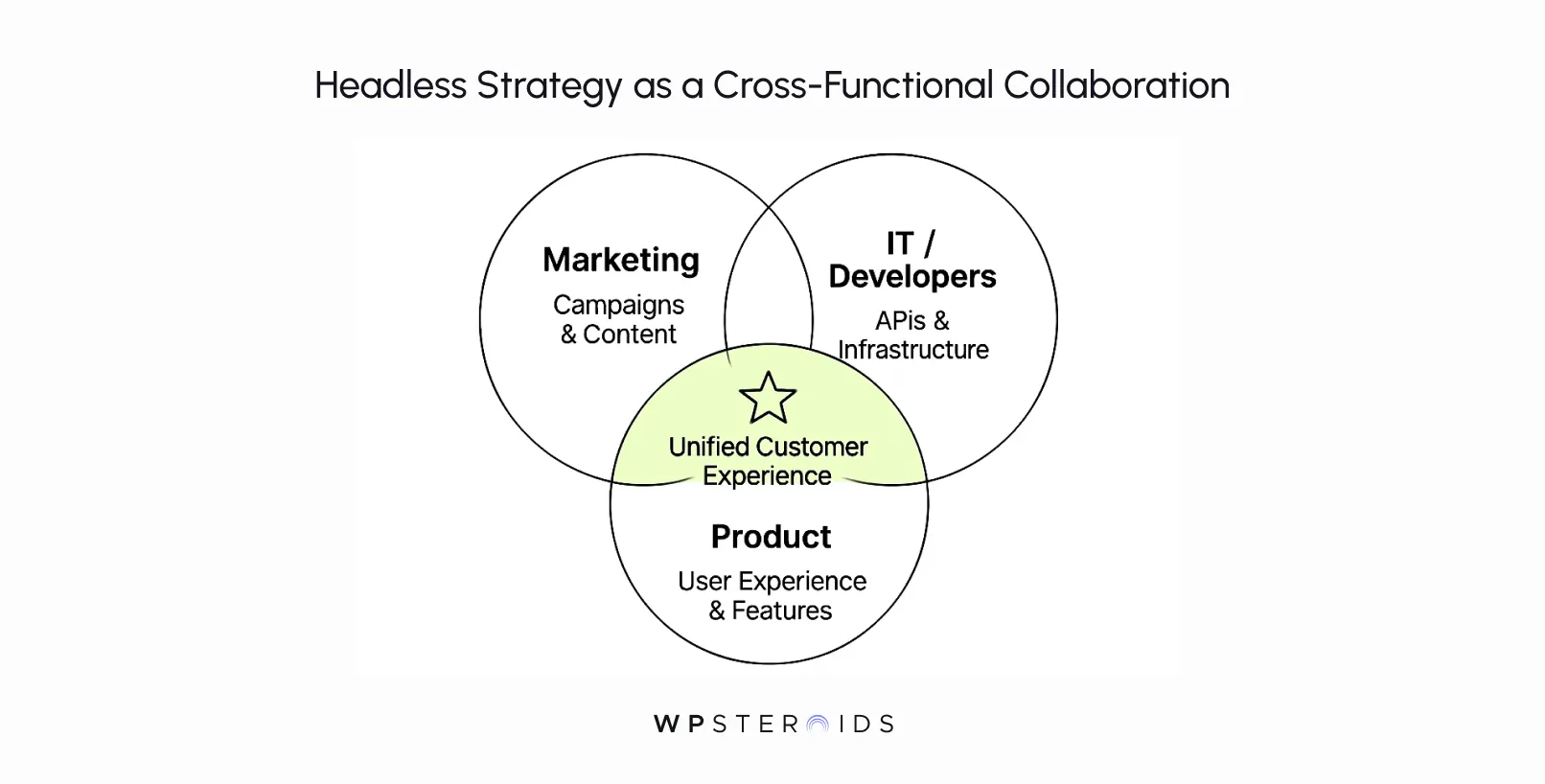
The power of headless architecture is that it enables your teams to work differently. It allows your marketing team to launch new campaigns without filing an IT ticket and empowers your developers to experiment with new technologies without breaking the entire system.
But this power can only be harnessed when everyone is aligned on the same strategic goal: creating a better, more unified customer experience.
The technology is the tool; the cross-functional business strategy is what unlocks its true potential.
A unified journey is a great start, but a personalized unified journey is where you build lasting customer loyalty. Modern customers don't just want consistency; they expect you to understand their specific needs and preferences.
They want to feel seen. Personalization is the key to transforming a functional omnichannel experience into a memorable one, and a headless architecture is the engine that makes it possible at scale.
So, what role does personalization play? It's about reducing friction. Instead of making a customer search for the products they viewed yesterday on their phone, a personalized journey brings those products to the forefront of their desktop experience today.
In a traditional, monolithic system, this is incredibly difficult. Customer data is often trapped in channel-specific silos. The data from your mobile app doesn't easily talk to your website, so the personalization is shallow and incomplete.
You’re only ever seeing a small piece of the customer's story.
This is where the API-first nature of headless architecture becomes a superpower. Think of your headless back end as a central hub with universal connection ports.
This setup allows you to create a single, unified profile for each of your customers. Every interaction, whether it happens on the mobile app, the website, or an in-store kiosk, feeds data back into the CDP.
This creates a rich, 360-degree view of each customer's behavior and preferences. Now, you can use that unified data to deliver a truly personalized customer experience across every single channel.
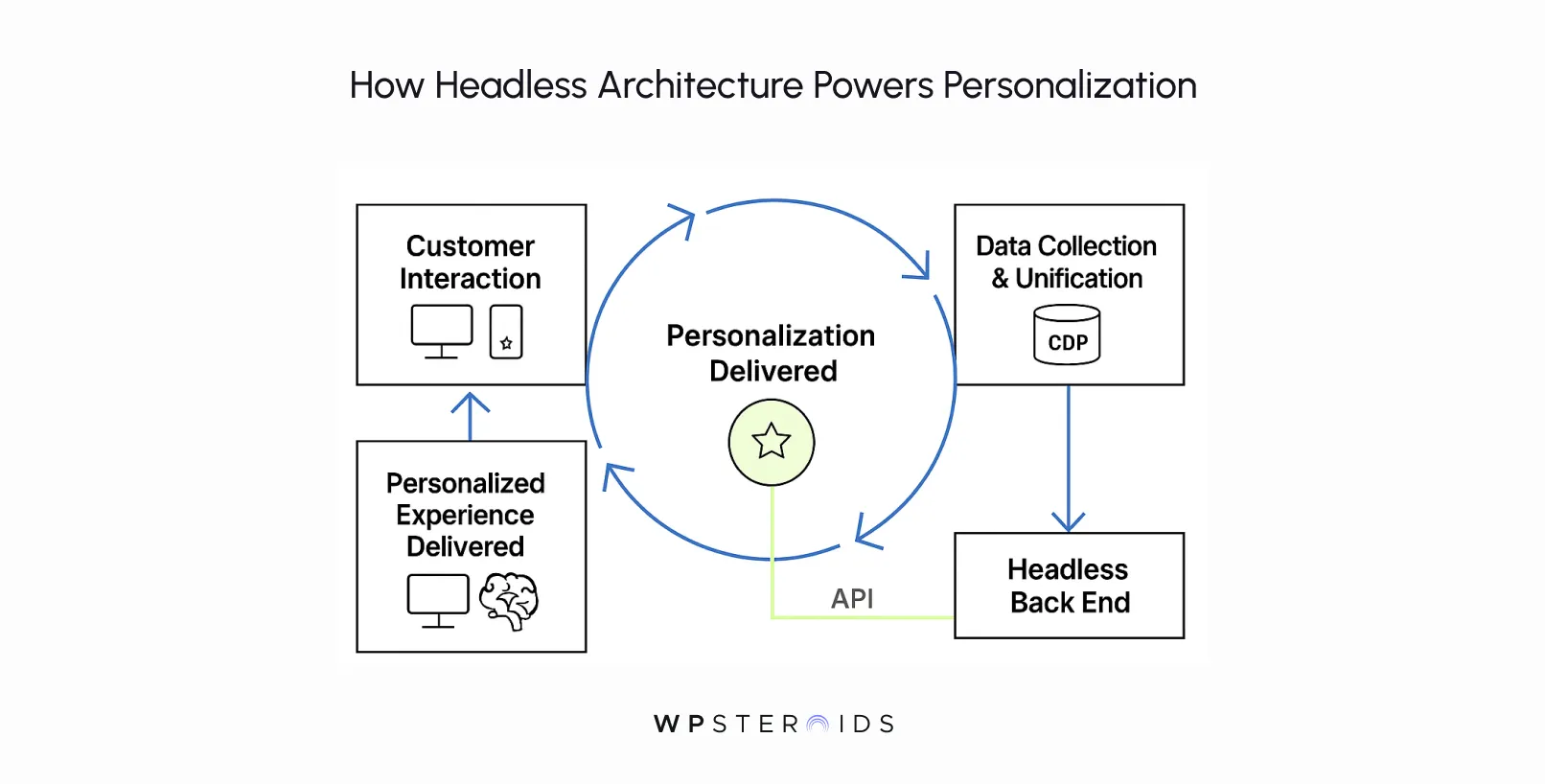
This strategic integration is central to building a future-proof unified commerce strategy.
By leveraging headless architecture, you’re not just sending content to different screens; you’re building an intelligent, interconnected ecosystem that listens to your customers and adapts to their needs in real-time, no matter how they choose to interact with your brand.
Theory and analogies are helpful, but the real proof is in the results. Seeing how other businesses have navigated the transition to headless and reaped the rewards is what transforms an abstract concept into an achievable strategy.
These real-world examples demonstrate how a headless approach can be used to solve specific, painful business problems and dramatically improve customer experiences.
The Brand: A popular online fashion retailer in the B2C space
The Brand: A cosmetics company with a presence in over 20 countries.
The case for a headless customer experience is compelling, but making the switch is a significant strategic undertaking that requires careful planning.
It's not simply a matter of unplugging an old commerce platform and plugging in a new one.
A successful transition depends on a clear-eyed assessment of your organization's readiness and a deliberate approach to selecting the right technology.
Before you dive into vendor demos and feature lists, it’s crucial to look inward.
A headless approach fundamentally changes how your teams work together, and being unprepared can turn a strategic advantage into an operational headache.
Here are the key questions your leadership team should be asking:
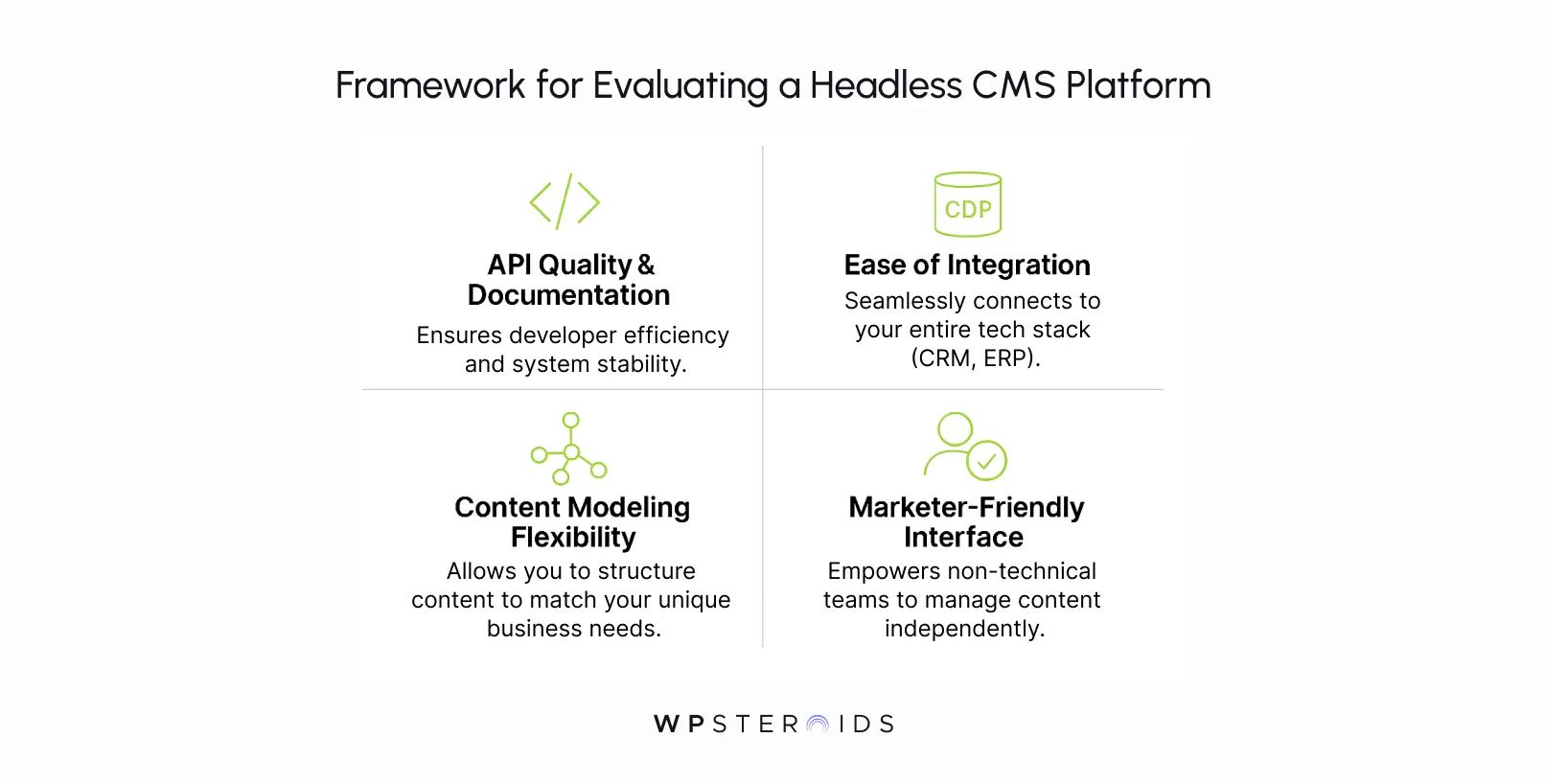
Once you have a clear internal strategy, you can begin the process of choosing a headless cms for e-commerce.
Not all platforms are created equal, and the right headless cms for your business will depend on your specific goals, technical maturity, and existing tech stack.
When choosing a headless CMS, look beyond the marketing slicks and focus on these critical capabilities:
The journey from a fragmented, channel-centric operation to a unified, customer-centric one may seem daunting, but it is the definitive path forward.
The evidence is clear: headless isn't just a fleeting trend; it's a fundamental shift in how successful commerce businesses build and manage digital experiences to meet the non-negotiable demands of the modern, channel-agnostic customer.
So, why are headless websites and experiences the future in 2025 and beyond?
It’s because customer expectations will only continue to diversify. Tomorrow's touchpoints might be augmented reality glasses, smart vehicle dashboards, or interactive home appliances.
A monolithic architecture forces you to rebuild or perform complex integrations for every new channel that emerges. A headless architecture, by its very nature, is ready for this unknown future.
By unifying your customer journey with a headless foundation, you create an agile, future-proof engine.
You’re no longer building a website; you’re building a central nervous system for your brand that can power any experience, on any device, at any time.
This brings us back to the core message: to win in the future, you must move from a channel-centric to a customer-centric model.
Your strategy must evolve into a broader unified commerce strategy where every team and every piece of technology is aligned around the customer.
A headless architecture is the technical foundation that makes this strategic imperative possible. It provides the freedom and flexibility required for unlocking fresh customer experiences that will delight your audience and build lasting loyalty.
Unify your customer journey and unlock unparalleled flexibility! Let's discuss how a headless strategy can transform your business. Book your discovery call today.
Why is headless architecture becoming popular in customer experience design?
Headless architecture is gaining popularity because it gives businesses total creative freedom. It separates the back-end content management from the front-end design, allowing teams to create the best possible, custom-tailored experience for any channel—be it a website, mobile app, or in-store kiosk—without being limited by the rigid templates of a traditional, all-in-one platform.
Which industries benefit most from adopting headless architecture?
Any industry focused on delivering content and commerce across multiple touchpoints benefits significantly. E-commerce and retail are the most common, but media, travel, finance, and manufacturing also see huge advantages. Essentially, if your customers interact with you on more than one device or platform, a headless approach can help unify that experience.
How does headless architecture improve the customer journey?
It improves the customer journey by creating a single source of truth. All your product information, content, and business logic are stored in one central backend. This eliminates the data silos that cause inconsistencies, ensuring that a customer sees the same price, promotion, and content whether they are on their laptop, phone, or any other device, making the journey seamless.
How does it help create a seamless omnichannel experience?
By design. The core principle of headless is "create content once, publish it everywhere." The back end manages and stores the content, and APIs deliver it to any front-end "head." This means your mobile app, website, and digital signage are all pulling from the exact same information source, guaranteeing a perfectly consistent and seamless omnichannel presence.
Can headless architecture increase customer retention and loyalty?
Absolutely. A superior customer experience is a key driver of loyalty. Headless architecture contributes to this by enabling faster site speeds, providing consistent information across all touchpoints, and making deep personalization possible. When a customer's journey is easy, intuitive, and relevant to them, they have every reason to return.
What ROI can businesses expect from implementing headless solutions?
The return on investment (ROI) from a headless implementation is multifaceted. It includes direct financial gains like increased conversion rates from better site performance and user experience. It also delivers significant operational ROI through faster time-to-market for new features and marketing campaigns, and reduced costs from more efficient, centralized content management workflows.
How does headless architecture support personalization at scale?
Its API-first nature makes it the perfect foundation for a modern personalization strategy. Headless systems are designed to easily integrate with best-in-class tools like Customer Data Platforms (CDPs) and AI-powered recommendation engines. This allows you to unify customer data and then deliver truly 1-to-1 personalized content and product recommendations to any touchpoint at scale.
What are the security considerations when adopting a headless approach?
While decoupling the front end can add a layer of security by hiding your back-end infrastructure from direct public access, it also places critical importance on securing the APIs that connect the two. A robust security strategy involves secure API gateways, proper authentication and authorization protocols (like OAuth 2.0), and regular security monitoring to protect the data in transit.
How does headless architecture enable consistent experiences across web, mobile, and IoT?
Consistency is achieved through the central "body." The back end holds all the content and logic. Whether a request for a product's price comes from a web browser, a native mobile app, or a smart fridge's IoT interface, they all call the same API endpoint and receive the same data from the same source, ensuring 100% consistency.
How does headless architecture improve site speed and responsiveness for end users?
It allows developers to use modern front-end technologies (like static site generators and JavaScript frameworks) that are built for speed. Because the presentation layer is decoupled, it can be optimized independently to be extremely lightweight and fast, leading to near-instant page loads and a much more responsive, enjoyable experience for the end user.
What role does headless play in delivering personalized recommendations?
Headless architecture acts as the flexible and fast delivery mechanism. A separate personalization engine can analyze user data to decide which products to recommend. The headless system then uses APIs to instantly fetch the content for those specific products and display them seamlessly within the user's current experience, on whatever channel they're using.
What role does headless play in unifying data across touchpoints?
While a Customer Data Platform (CDP) is typically used to unify the customer data itself, the headless architecture is what allows you to act on that unified data effectively. It provides the API-driven infrastructure needed to take the insights from your unified data and deliver a consistent, personalized, and context-aware experience across every single one of your customer touchpoints.